Kate's Queen City Notes

Blundering through Cincinnati, laughing all the way


Leave a comment

100 Books by 40: THE SECRET GARDEN

Am I the only person who didn’t know that The Secret is based on ideas in The Secret Garden? An internet search is telling me that, no, this isn’t common knowledge. Let me back-up a moment.

I just finished reading The Secret Garden. It seemed like a charming children’s book until the end. The premise of the story is that a spoiled little girl losses her parents to cholera and is shipped to a mysterious mansion to live with a distant relative. The girl gains entry to a locked garden and discovers many other things regarding the mysterious mansion. While on this adventure, she becomes a nicer child and puts off some of her bratty ways. So far so good.

In the third to last chapter, one of the children has a very long “sermon”, the book’s word, not mine. This sermon basically extols the virtues of positive thinking.  While I was reading page after page of this, I thought when did this children’s book morph into a self-help title? Further more, I am wondering if Rhonda Byrne (author of The Secret) gave any credit to Frances Hodgson Burnett (author of The Secret Garden). My quick and sloppy googling didn’t show any acknowledgement, but I freely admit that I didn’t invest more than 5 minutes on searching.

So, I’m wondering why Burnett added this bit to her book. It would have been a charming story without it. I suppose the character transformation is partially explained by this, but she provides equally plausible explanations such as fresh air, physical activity, and good friendship. I can only think that conveying the power of positive thinking was important to Burnett, given that she shoe-horned it into the story line.

Regardless of this mystery, the book is a pleasant read. In terms of the other children’s books on the list, it doesn’t beat out Charlie and the Chocolate Factory. But it’s quite short and could easily be read in a week. Oh, and this was my first title that I borrowed from the Hamilton County Library on my Kindle. It was pretty easy. I will gladly do that again.


Leave a comment

100 Books by 40: THE SHELL SEEKERS

There are books that go down like cough syrup. I gulp the words down knowing that I will emerge from the experience better. The characters and the words will develop and leave me a better person in indescribable ways. The books that I’ve read recently have been of this nature. I can’t say that the books are bad, nor can I say that I enjoyed reading them.

The Shell Seekers was a beautiful escape; I couldn’t find enough hours in the day to lose myself in its pages. The book is about generational differences and family relationships. The time stretches from early 1900’s until 1980’s in various locations, but primarily England.

As usual, I am going to hold off on discussing major plot points to avoid spoiling it for any other readers. However, one of the ideas conveyed in the book spurred further thought. There’s a tension between loving someone as they are, and maintaining healthy boundaries in relationships. And this tension exists between family, friends, and spouses especially so. What’s the difference between giving out of obligation and giving out of impulse? When is it appropriate to hold some truth back?

Truth-telling has it’s pitfalls. Yes, that dress makes your butt look big. Actually, with those rings under your eyes, you look terrible. Yeah, you totally botched that meeting. There are times were the unvarnished truth just isn’t kind. And in family relationships, the truth without considering the conclusion can be cruel. I’m not advocating for wholesale lying. If you are an adult human and have successful relationships, you occasionally lie, or omit the truth.

This book navigates these topics. It’s sensitive and beautiful. I highly suggest it.


Leave a comment

100 Books by 40: GOOD NIGHT, MR TOM

Picking up this book was a delightful break from the tedium that was reading The Count of Monte Cristo. The book is a young adult title about a boy that was evacuated from London during World War II. While the writing wasn’t challenging to read, the novel covered some heavy topics.

The boy, Willie, left an abusive mother and taken in by a man that had cut himself off from others after the death of his wife and young child. The story centers around the transformation of the boy and the man. They are wounded souls who find healing in each other’s company.

My facebook feed brings many things to my attention, but I would say the vast majority highlight the negative power that we have to belittle and harm both those around us and ourselves. It’s refreshing to contemplate the best that we can be versus the worst. On the rare occasion that someone shares something positive or beautiful, I feel relieved, but those things fail to over-power the negative emotions that I am often left with.

I know people have either left their facebook accounts or blocked certain posts from turning up in their feed, and I get that. There’s just some stuff that doesn’t add value to your life and only brings up negative emotions. There are moments were we can be constructively challenged, but social media is rarely the space for it.

I’ve already limited my consumption of certain types of news media for the reason stated above. Twenty-four hours news stations were among the first things to get winnowed out of my information diet. I’m considering that facebook might get a similar treatment. I am going to pare back my facebook browsing for a while, and see how that goes.

Mister Tom is a nice, easy read. The characters are charming. The setting reminds me how little Americans have been touched by war since the Civil War. The towns people in the book all pitch in to help with the war effort. Much like Americans accepted rationing and planted victory gardens to support WWII, people accepted a certain level of shared sacrifice for the greater good. We aren’t so far from that time to make it impossible for our culture to value self sacrifice again. In fact, I am sure that millions of people in their own small way are still doing this today. There’s a big world out there full of people who are doing their best, and social media isn’t a great lens to take a look at it.


2 Comments

100 Books by 40: EMMA

Going from Jane Austen to Thomas Hardy is disorienting. I finished Emma and started Far from the Maddening Crowd yesterday. Austen and Hardy’s works were only separated from each other by about 40 years, but that period introduced considerable changes to British culture. Plus, Austen’s witty dialog is a stark contrast to Hardy’s brooding characters and lush context descriptions. In Austen’s work the transformation engine is love, whereas Hardy’s is suffering. Dropping one book and immediately picking up the other was a challenge.

Concurrently, I have been reading The Count of Monte Cristo for four months. FOUR MONTHS. The things that I don’t appreciate about this book are legion. It was written in French, and like Crime and Punishment, I’m not appreciating all the translation choices. There is quite a bit of repetition. Like many novels from that time period, it was published serially in a periodical; Dumas might have reiterated significant plot points to remind readers. To top it off, the plot feels like a soap opera. Seriously, this book is Guiding Light set in the nineteenth century.

All that challenging reading explains why I was so pleased to pick up Goodnight, Mister Tom. Young Adult Fiction was exactly what my wearied brain needed. Anyone want to place bets that I will finish Goodnight, Mister Tom before I finish The Count of Monte Cristo? Don’t bother. Gambling implies that there is reasonable possibility of either happening. Lets be honest, there isn’t.

I haven’t said anything about Emma. It was pleasant. I found Emma and her father obnoxious. And given that I am on Jane Austen book number 3 in this list, I am chafing a bit at the bright, sunny endings that her books have. Those criticisms aside, her dialog and wit save the day. But I guess in keeping with most romance books, it didn’t tell me anything about life or relationships that I didn’t already know. It was a pleasant diversion and not much else.

I need to wrap this up and get back to The Count of Monte Cristo. I’m on renew number five with the library, and I just can’t bring myself to do another.

I just got a new camera. This means you will all suffer through my learning journey with it.

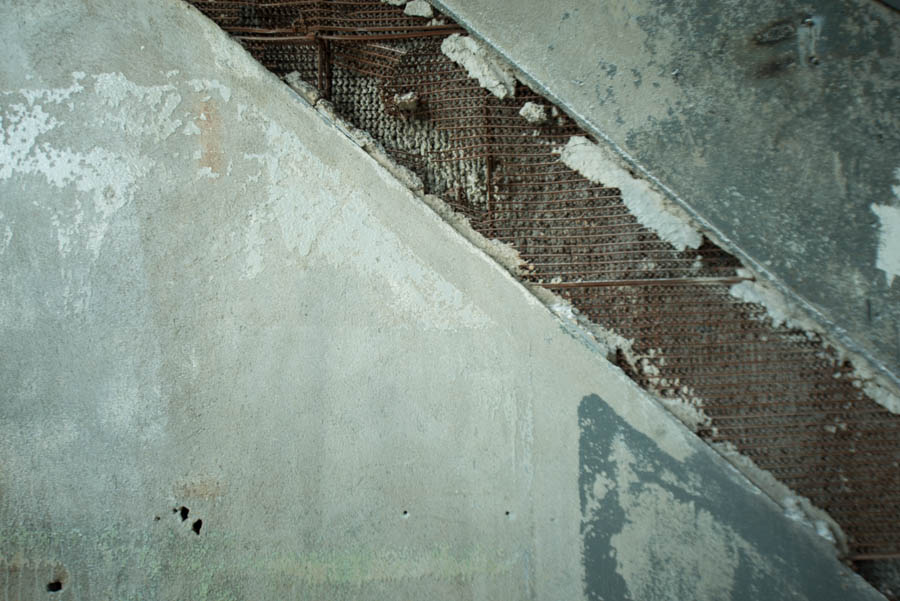
The wall under the stairs.

The wall under the stairs.

This sandstone glitters.

This sandstone glitters.

Where does the water go?

Where does the water go?

This is the prototype for the Brooklyn Bridge.

This is the prototype for the Brooklyn Bridge.

Shadow of life.

Shadow of life.

This is where the Bengals play.

This is where the Bengals play.

This area in the foreground is where the banks second wave will be built. Someday this view of the city will be obscured.

This area in the foreground is where the banks second wave will be built. Someday this view of the city will be obscured.

Fixing the side walks.

Fixing the side walks.

This building has some mega ugly 70's façade put on it. This is what was underneath.

This building has some mega ugly 70’s façade put on it. This is what was underneath.

Front view of the building. I hope they restore the original façade. It's way more awesome than the 70's mess that was there before.

Front view of the building. I hope they restore the original façade. It’s way more awesome than the 70’s mess that was there before.

Inside Rhinegiest.

Inside Rhinegiest.

Beer.

Beer.


Leave a comment

100 Books by 40: A Christmas Carol

I finished A Christmas Carol a few weeks ago. Most people are familiar with the plot of this book, and I was wondering if I had anything fresh to say about it. I quick internet search has told me that focusing on Want and Ignorance isn’t exactly fresh, but I want to write about it anyway.

I’m not going to structure this post with advanced spoiler alerts, because of how ubiquitous this story is in American culture. Be warned. From this point forward, I will reveal key plot points.

A Christmas Carol is most obviously a story about materialism and happiness as they interact with human connection. This story is just as relevant today as it was when it was written. Consumerism is our religion in America. And while certain aspects of poverty are objectively better today than they were in 17th century England, we are just as inclined to define ourselves by what we own and consume as opposed to what we produce or the relationships we nurture.

All of that feels obvious to me. The wretched children in the robe of Christmas Present have rolled around in my head for weeks since finishing the book. Dickens had to pick the two most potent forces that bend people to the worst of their potential.

Conceptually, what breaks us the most when we are young? What sets us on a path that hobbles our ability to be productive? Given incarceration rates and the prevalence of poverty, we are still struggling.(http://en.wikipedia.org/wiki/Incarceration_in_the_United_States)

Dickens thought ignorance and want were the two things preventing children from developing into successful adults. Was he right? The solution to ignorance is to provide education and access to information. The solution to want is to ensure that children, even in the worst poverty, have their physical needs met.

With public education and food stamps, one would think that America has made progress on these issues. According to this (http://feedingamerica.org/hunger-in-america/hunger-facts/child-hunger-facts.aspx) 15.9 American children lived in food insecure households in 2012. And regardless of a free education, the illiteracy rate hasn’t changed in the last 10 years; it’s been stubborn at %14 of the population.

One can’t say that we aren’t trying. And, the literacy rate was closer to %60 in the early 1800’s, so we have improved. At the dawn of 1900, child labor laws were enacted to enable children to stay in school, but %20 of all children died before reaching 1 year of age. Infant mortality rate in the US is only 5.6 for every 1000 live births.

Regardless, it seems that having 15.9 million kids at risk of going hungry is too much for a rich nation to excuse. Why haven’t we stamped out hunger and illiteracy? One conclusion can be drawn; throwing money at the problems isn’t the only solution. I suspect that a poor home life can unravel any good that public education and food distribution programs can do. If you are unfortunate enough to have a care-giver who fails you in key ways, you can still be hungry and uneducated in America. And, honestly, I don’t know how to mitigate for that. There’s nothing the state will ever do to make up for this loss.

I wonder what Charles Dickens would think of that. Given the events in A Christmas Carol, I suspect he would say that each of us with time and resources should be engaged in our communities on a personal level. He would say that concerned neighbors should be on the look out for neglected children. In that sense, the human connections that he advocates for in A Christmas Carol are still sorely needed.


Leave a comment

100 Books by 40: Persuasion

Before I get into Persuasion, I need to vent about the BBC’s 100 Best Books list. I’ve just discovered that number 59. Artemis Fowl is actually a series of eight books. EIGHT! Between this and the BBC slyly listing Lord of the Rings and His Dark Materials as two books (actually six books), I want to start calling the list the BBC’s Best 111 Books. I realize that LOR was intended as one whole book, but conventionally it was released as three. I call shenanigans on the BBC. I will be reading Artemis Fowl for months. At least it is a young adult series; I shudder to think of a Kafka work spanning eight books.

I’m getting lulled into enjoying British Literature, but I would like to follow the BBC’s list with something a little less Brit Lit centered. I might have found that list a few days back. By the time I complete the BBC’s list I will have read about 30 of the books on this list. Blending of fiction with non-fiction feels haphazard. I find that appealing. Some intern just dreamed up this list, and I don’t care.

http://www.businessinsider.in/100-Books-Everyone-Should-Read-Before-They-Die/articleshow/29916032.cms

Now then, back to Brit Lit. I really enjoy Jane Austen. Going into Pride and Prejudice I was prepared to hate it. I don’t like romance. I hate romantic comedies. Reading Jane Austen and George Eliot has given me clarity on why. My romantic media consumption was limited to Hollywood’s interpretation. My partner just watched “Love Actually”, this Christmas season and was enraged by how absurd it was. There are movies that pull the curtain back on real relationships which are most often a balancing between good intentions, false assumptions, short tempers, and the grinding aspects of everyday life. “Blue Valentine” comes to my mind. Lets just say “Love Actually” was not one of them.

The point is I went into Jane Austen and George Eliot thinking “Pretty Woman”. I came away with appreciation for Austen’s wit. Both writers display artistry with language and acute abilities to tell the truth about relationships. There are beautiful moments along side frustration and disappointment. It’s a continuation of all that you struggle with plus the struggles of another. At its best relationships can drive us to  be our best. But growth hurts. It’s hard.

Persuasion is a great little read. It doesn’t feel as epic as Pride and Prejudice, but I think that’s due to its reduced length. If you want a bit of Austen without committing to Pride and Prejudice or Emma this is the read for you.


Leave a comment

100 Books by 40: David Copperfield

My copy of David Copperfield has an introduction by the author himself, and I found his words quite relevant to my own experience with the novel.

“Of all my books, I like this the best. It will be easily believed that I am a fond parent to every child of my fancy, and that no one can ever love that family as dearly as I love them. But, like many fond parents, I have in my heart of hearts a favourite child. And his name is DAVID COPPERFIELD.”

If you’ve been following my blog you might know that I’ve already read Great Expectations, and I wasn’t terribly fond of it. Mrs. Havisham lords over that book and swallows any lightness that Pip provides. It’s a long, bleak read. In contrast, David Copperfield is alive with witty, endearing characters, despite the plot being flush with personal catastrophe. In particular, David’s aunt, Betsy Trotwood, was a peculiar, sassy old broad that I enjoyed in every way.

I often avoid talking about particular parts of the plot to refrain from spoiling the read for others who fail to heed my alerts. That just can’t be avoided here, because as I want to talk about how much I liked the resolution of one of the story arcs.

Here goes. *****************SPOILER ALERT*****************************

For readers whom have not read the book and don’t intend on it, let me set the scene for this story arc. David’s father dies before he is born. His mother is a less than sensible woman and remarries to a severe, cruel man. David’s mother is driven to an early grave by her new husband, and David is left with the wicked stepfather who at best neglects him and at worst abuses him.

Many other story arcs are introduced and resolved between the beginning and end of this arc, such that years pass with no update on the stepfather. After achieving success as an adult, David hears from a family friend that this man has found another kind woman to marry and mentally abuse. I was curious if Dickens would conjure up an emotionally satisfying final confrontation between David and his step father. He doesn’t. The story arc is left there with David knowing that his step father is bringing suffering to a new woman.

I loved this. I loved this lack of closure. It’s what real life is. I think each of us have experienced some deep pain at the hands of another. There’s rarely an epic moment were the perpetrator acknowledges the emotional carnage that they created. People are either too self-absorbed to consider how their actions effect others, or they are steeped in denial. Possibly both. David Copperfield has simply lived beyond his destructive stepfather. He didn’t wallow in that loss. Isn’t that what real healing usually looks like?

I loved this book. I loved these characters; they warrant the favorite child status. I am mildly relieved to find a Dickens book that I like. Does that make me less of a philistine? Maybe not. But it represents my slow-growing appreciation of British Literature, without question.

It’s been a while since I updated my progress through the 100 Best Books list, so here it is. I’m approaching my half way point. No joke, I am excited to read some of my old favorites once the list is through. Success is nearly certain. I should be able to finish before I’m 40. I don’t know what it means that I’ve committed hours to something that I wasn’t sure was attainable on the outset.

Reading now:
38. Persuasion, Jane Austen
44. The Count Of Monte Cristo, Alexandre Dumas

Finished reading:
1. The Lord of the Rings, JRR Tolkien
2. Pride and Prejudice, Jane Austen
3. His Dark Materials, Philip Pullman
4. The Hitchhiker’s Guide to the Galaxy, Douglas Adams
5. Harry Potter and the Goblet of Fire, JK Rowling
6. To Kill a Mockingbird, Harper Lee
7. Winnie the Pooh, AA Milne
8. Nineteen Eighty-Four, George Orwell
9. The Lion, the Witch and the Wardrobe, CS Lewis
10. Jane Eyre, Charlotte Brontë
11. Catch-22, Joseph Heller
12. Wuthering Heights, Emily Brontë
13. Birdsong, Sebastian Faulks
14. Rebecca, Daphne du Maurier
15. The Catcher in the Rye, JD Salinger
16. The Wind in the Willows, Kenneth Grahame
17. Great Expectations, Charles Dickens
18. Little Women, Louisa May Alcott
19. Captain Corelli’s Mandolin, Louis de Bernieres
20. War and Peace, Leo Tolstoy
21. Gone with the Wind, Margaret Mitchell
22. Harry Potter And The Philosopher’s Stone, JK Rowling
23. Harry Potter And The Chamber Of Secrets, JK Rowling
24. Harry Potter And The Prisoner Of Azkaban, JK Rowling
25. The Hobbit, JRR Tolkien
26. Tess Of The D’Urbervilles, Thomas Hardy
27. Middlemarch, George Eliot
28. A Prayer For Owen Meany, John Irving
29. The Grapes Of Wrath, John Steinbeck
30. Alice’s Adventures In Wonderland, Lewis Carroll
31. The Story Of Tracy Beaker, Jacqueline Wilson
32. One Hundred Years Of Solitude, Gabriel García Márquez
33. The Pillars Of The Earth, Ken Follett
34. David Copperfield, Charles Dickens
35. Charlie And The Chocolate Factory, Roald Dahl
36. Treasure Island, Robert Louis Stevenson
37. A Town Like Alice, Nevil Shute
39. Dune, Frank Herbert
41. Anne Of Green Gables, LM Montgomery
42. Watership Down, Richard Adams
43. The Great Gatsby, F Scott Fitzgerald
46. Animal Farm, George Orwell
53. The Stand, Stephen King
60. Crime And Punishment, Fyodor Dostoyevsky
63. A Tale Of Two Cities, Charles Dickens *I read this when I was too young to appreciate it; I would like to read it again as an adult. I will do so if I have time.
70. Lord Of The Flies, William Golding *I’ve read this twice. I will read it again if I have time.
87. Brave New World, Aldous Huxley
90. On The Road, Jack Kerouac *I’ve read this twice. I will read it again if I have time. I have the unabriged unedited version and will probably take on that if time allows.

Pending reading:
40. Emma, Jane Austen
45. Brideshead Revisited, Evelyn Waugh
47. A Christmas Carol, Charles Dickens
48. Far From The Madding Crowd, Thomas Hardy
49. Goodnight Mister Tom, Michelle Magorian
50. The Shell Seekers, Rosamunde Pilcher
51. The Secret Garden, Frances Hodgson Burnett
52. Of Mice And Men, John Steinbeck
54. Anna Karenina, Leo Tolstoy
55. A Suitable Boy, Vikram Seth
56. The BFG, Roald Dahl
57. Swallows And Amazons, Arthur Ransome
58. Black Beauty, Anna Sewell
59. Artemis Fowl, Eoin Colfer
61. Noughts And Crosses, Malorie Blackman
62. Memoirs Of A Geisha, Arthur Golden
64. The Thorn Birds, Colleen McCollough
65. Mort, Terry Pratchett
66. The Magic Faraway Tree, Enid Blyton
67. The Magus, John Fowles
68. Good Omens, Terry Pratchett and Neil Gaiman
69. Guards! Guards!, Terry Pratchett
71. Perfume, Patrick Süskind
72. The Ragged Trousered Philanthropists, Robert Tressell
73. Night Watch, Terry Pratchett
74. Matilda, Roald Dahl
75. Bridget Jones’s Diary, Helen Fielding
76. The Secret History, Donna Tartt
77. The Woman In White, Wilkie Collins
78. Ulysses, James Joyce
79. Bleak House, Charles Dickens
80. Double Act, Jacqueline Wilson
81. The Twits, Roald Dahl
82. I Capture The Castle, Dodie Smith
83. Holes, Louis Sachar
84. Gormenghast, Mervyn Peake
85. The God Of Small Things, Arundhati Roy
86. Vicky Angel, Jacqueline Wilson
88. Cold Comfort Farm, Stella Gibbons
89. Magician, Raymond E Feist
91. The Godfather, Mario Puzo
92. The Clan Of The Cave Bear, Jean M Auel
93. The Colour Of Magic, Terry Pratchett
94. The Alchemist, Paulo Coelho
95. Katherine, Anya Seton
96. Kane And Abel, Jeffrey Archer
97. Love In The Time Of Cholera, Gabriel García Márquez
98. Girls In Love, Jacqueline Wilson
99. The Princess Diaries, Meg Cabot
100. Midnight’s Children, Salman Rushdie


Leave a comment

100 Book by 40: Treasure Island and Anne of Green Gables

Who doesn’t like pirates? No one. Honestly, that could be the end of my thoughts on Treasure Island. The book was a fun little romp. The pirates were larger than life. The plot was fun. The book was tolerably short. You should read it.

I could draw a bunch of comparisons between The Pirates of the Caribbean and Treasury Island. But, really, is it any wonder that the plot of a book is better than the plot of a movie? The book was wonderful even lacking a hot Johnny Depp.

On to Anne of Green Gables, I was fully expecting to hate this book. I’ve not enjoyed most of the children’s books that I’ve read on this list, particularly those with female leads. But I got this as an audio book from the library. I loaded up my iPod, and listened as I drove all over Illinois, Indiana, and Ohio this holiday season. I suspect listening to the book made me enjoy this book more than I would have reading it. One of the things that I will pay a bit more attention to going forward is how my experience differs from listening vs reading.

Objectively, Anne was pretty obnoxious character. Because I could tune her out a bit while enjoying the scenery, I found her more tolerable. I am certain that I will never read this book. I am happy that I heard it, mostly for Morella’s character development. Margaret Atwood wrote the intro to my particular copy of the book and suggests that the book is primarily about Morella. I tend to agree with her position. The character that experiences the most transformation is Morella. While Anne transforms from a child to a woman, Morella embraces parts of her self that had lain dormant for years. Technically, I haven’t listened to the last few chapters of Anne of Green Gables, but, as I’ve seen the movie and the f0reshadowing is pretty clear, I will consider this one done in terms of blogging about it. I will listen to the last chapters on my run this week.


Leave a comment

100 Books by 40: DUNE

The last few weeks have felt overwhelming. While I enjoy the time off around the holidays, I don’t enjoy that I am traveling so much. There are many reasons for this. I hate driving. I’ve reached an age where my back appreciates no beds other than my own. My separation from the gym makes my anxiety pool with zero outlets. Eating off my typical diet leads to a 5 to 10 pound weight gain that will need to be addressed come January. Clothes get tighter. I returned from Chicago six days ago. Yesterday I returned from Northern Ohio. Discomfort. That’s a good word to describe my holidays.

As a solid introvert, I lose control of my alone time while traveling. I like people. I like being around people, but it exhausts me. I need little recharging moments throughout my day. I peppered reading sessions throughout my 4-day trip to Chicago. Every day, I would sneak off for a couple of hours and read Dune. I had other books to read, like Treasure Island and David Copperfield. But I always picked Dune. Since my other two reading selections where snug on my Kindle, those books would have been more sensible reading choices. Dune was borrowed from my library was decidedly more bulky and less convenient for taking busses and the train around Chicago.

I picked Dune because it captivated me from page one. If you’ve been reading my blog, you know that I don’t like science fiction as a general rule. I wasn’t fond of Hitchhiker’s Guide to the Galaxy. I’ve struggled to put my finger on why I often don’t like this genre. My least wordy explanation is that lazy writers use the non-realistic setting to enable sloppy plots, although admittedly this wasn’t the problem with Hitchhiker’s Guide to the Galaxy.

There were thing things that I loved about Dune. First, there wasn’t excessive creative license around what the creatures and characters looked like. Herbert seemed to save all his creative energies for developing classes of characters that come with specific sets of skills and abilities, the Bene Gesserit are an excellent example of this. I get the sense that sci-fi writers get carried away with describing the strange visuals of their creatures and then fail at adequate character development.

Second, Herbert revealed details around both these classes of characters and context information at an appropriate pace. The novel starts out with little to no description and jumps right into plot. He would mete out details and bits of back-story as he described action. This is one of the best paced novels I have ever read.

Third the political, ecological, and religious themes  are excellent. First, this is one of the first fictional books that I’ve ever read that considers the ecological implications on plot development. The interplay between religion, power, and politics resonates as being in line with our own history books.

I will be reading the sequels to this book. This is one of the few books that I just couldn’t put down once I started. I highly suggest that you give it a read.


Leave a comment

100 Books by 40: A Town Like Alice

I’ve been on this 100 books by 40 mission for a little over a year. At the outset, I wanted this effort to drive me to read more. If that is the only measure of success, this has been very successful. There have been other unintended consequences.

I like writing. I am doubtful that my writing is of interest to most other people, but I am satisfied with the effect the process has on my mood and thoughts. I’ve noticed through the year that my thoughts are getting easier and easier to type. I’ve picked up editing habits that yield ever better results. My posts now go though multiple draft readings across days prior to posting. Plus, rereading my year of posts helps me spot grammatical issues across time. I noticed that I have a problem mixing my metaphors. Metaphors will get extra attention in my edits from now on.

In addition to establishing better writing patterns, this year has made me a different reader. I recall in the not terribly distant past, I struggled with reading Dickens. The variations on English proved challenging. With Austen, Hardy, Eliot, Dickens, and the Bronte sisters behind me, I don’t struggle anymore. Seventeenth century British Literature feels easily in my grasp. I’m still pretty certain that I’m missing some nuance in these novels, but I easily follow plots and conversations.

These changes are positive, but I’ve noticed one effect that I’m ambivalent about. Reading these novels is making me more sensitive to technically good prose. I was gazing longingly at my unedited copy of On the Road, and I thought how exciting it will be to pick that up. It’s number 90 in my list, and it’s my favorite book. What a great way to celebrate wrapping up this adventure. Then I thought about how pedestrian recent novels feel to me now, fresh off Hardy and Eliot. What if I get to my favorite book and only find disappointment? What if I don’t enjoy David Foster Wallace anymore?

I can’t explain how sad this makes me feel. My favorite authors reach into my deepest thoughts and emotions and come back giving voice to things that I cannot find words for. Their voices resonate deeply, and make me feel less alone. But still, I’m too curious to deviate from this adventure. Now that I’ve started I must know if my most cherished books can withstand the changes that have been wrought in me.

So, all of that has nothing to do with A Town Like Alice. As mentioned in past posts, the 30’s are the land of 1000 page books, but A Town Like Alice broke from that trend with a mere 300 pages. The book is basically a war romance. The character development is good, and the true events that inspired part of the plot were fascinating. The female lead gets marched around Malaya with a group of British women for miles and miles. The Japanese didn’t have an appropriate camp to house them, so military leaders just kept sending them to different outposts without purpose. More than half of the women and children died.

I found all of the historical information in this book really interesting. It gave me a great sense of what Australia was like after World War 2. Otherwise, I found this book unremarkable.

Welcome to the 30's of the BBC's 100 best books list, also known as the land of 1000-page books.

Welcome to the 30’s of the BBC’s 100 best books list, also known as the land of 1000-page books.