Kate's Queen City Notes

Blundering through Cincinnati, laughing all the way


Leave a comment

100 Books by 40: A Prayer for Owen Meany

I finished 100 Years of Solitude and A Prayer for Owen Meany. Books that have an abundance of quirky characters annoy me. The last book that I read that had obnoxious, quirky characters was Captain Corelli’s Mandolin. Here’s what Captain Corelli’s Mandolin had going for it that 100 Years of Solitude did not, a good story. 100 Years of Solitude gets the dubious distinction of being the only book that I’ve read on the 100 best books list that I disliked enough to want to put down.

On top of my displeasure with 100 Years of Solitude, I am reading Middlemarch. My god, that book is so very long. It’s good, but I can’t shake the feeling that I will be reading it until winter. This is the context in which I read A Prayer for Owen Meany.

“…but every study of the gods, of everyone’s gods, is a revelation of vengeance toward the innocent.” – From A Prayer for Owen Meany

The book is set in 50’s-60’s New Hampshire, and 80’s Toronto. I am struggling to summarize what the book is about. It’s a story of childhood friends and how they are impacted by Vietnam, with a heavy splash of religion or more specifically faith. I don’t have it in me to talk about the religious aspects of the book. I feel like that would require 500 words to dive into and adequately discuss.

Here’s what struck me about the book. John Irving is a pretty great storyteller. Authors seem to over-play their hands when foreshadowing. Irving had moments of excessive foreshadowing. For each of those moments there were nine or ten instances of relating seemingly insignificant details that many chapters later gained significance. I loved it. This was a satisfying read.

” I believe that President Reagan can say these things only because he knows that the American people will never hold him accountable for what he says; it is history that holds you accountable, and I’ve already expressed my opinion that Americans are not big on history.” – From A Prayer for Owen Meany

“Mrs. Hoyt was the first person I remember who said that to criticize a specific American president was not anti-American; that to criticize a specific American policy was not anti-patriotic; and that to disapprove of our involvement in a particular was against the communists was not the same as taking the communists’ side. But these distinctions were lost on most of the citizens of Gravesend; they are lost on many of my former fellow Americans today.”  – From A Prayer for Owen Meany

Here’s an update on my reading list.
Reading now:
27. Middlemarch, George Eliot
33. The Pillars Of The Earth, Ken Follett

Finished reading:

1. The Lord of the Rings, JRR Tolkien
2. Pride and Prejudice, Jane Austen
3. His Dark Materials, Philip Pullman
4. The Hitchhiker’s Guide to the Galaxy, Douglas Adams
5. Harry Potter and the Goblet of Fire, JK Rowling
6. To Kill a Mockingbird, Harper Lee
7. Winnie the Pooh, AA Milne
8. Nineteen Eighty-Four, George Orwell
9. The Lion, the Witch and the Wardrobe, CS Lewis
10. Jane Eyre, Charlotte Brontë
11. Catch-22, Joseph Heller
12. Wuthering Heights, Emily Brontë
13. Birdsong, Sebastian Faulks
14. Rebecca, Daphne du Maurier
15. The Catcher in the Rye, JD Salinger
16. The Wind in the Willows, Kenneth Grahame
17. Great Expectations, Charles Dickens
18. Little Women, Louisa May Alcott
19. Captain Corelli’s Mandolin, Louis de Bernieres
20. War and Peace, Leo Tolstoy
21. Gone with the Wind, Margaret Mitchell
22. Harry Potter And The Philosopher’s Stone, JK Rowling
23. Harry Potter And The Chamber Of Secrets, JK Rowling
24. Harry Potter And The Prisoner Of Azkaban, JK Rowling
25. The Hobbit, JRR Tolkien
26. Tess Of The D’Urbervilles, Thomas Hardy
28. A Prayer For Owen Meany, John Irving
29. The Grapes Of Wrath, John Steinbeck
30. Alice’s Adventures In Wonderland, Lewis Carroll
31. The Story Of Tracy Beaker, Jacqueline Wilson
32. One Hundred Years Of Solitude, Gabriel García Márquez
42. Watership Down, Richard Adams
43. The Great Gatsby, F Scott Fitzgerald
46. Animal Farm, George Orwell
53. The Stand, Stephen King
60. Crime And Punishment, Fyodor Dostoyevsky
63. A Tale Of Two Cities, Charles Dickens *I read this when I was too young to appreciate it; I would like to read it again as an adult. I will do so if I have time.
70. Lord Of The Flies, William Golding *I’ve read this twice. I will read it again if I have time.
87. Brave New World, Aldous Huxley
90. On The Road, Jack Kerouac *I’ve read this twice. I will read it again if I have time. I have the unabriged unedited version and will probably take on that if time allows.

Pending reading:
34. David Copperfield, Charles Dickens
35. Charlie And The Chocolate Factory, Roald Dahl
36. Treasure Island, Robert Louis Stevenson
37. A Town Like Alice, Nevil Shute
38. Persuasion, Jane Austen
39. Dune, Frank Herbert
40. Emma, Jane Austen
41. Anne Of Green Gables, LM Montgomery
44. The Count Of Monte Cristo, Alexandre Dumas
45. Brideshead Revisited, Evelyn Waugh
47. A Christmas Carol, Charles Dickens
48. Far From The Madding Crowd, Thomas Hardy
49. Goodnight Mister Tom, Michelle Magorian
50. The Shell Seekers, Rosamunde Pilcher
51. The Secret Garden, Frances Hodgson Burnett
52. Of Mice And Men, John Steinbeck
54. Anna Karenina, Leo Tolstoy
55. A Suitable Boy, Vikram Seth
56. The BFG, Roald Dahl
57. Swallows And Amazons, Arthur Ransome
58. Black Beauty, Anna Sewell
59. Artemis Fowl, Eoin Colfer
61. Noughts And Crosses, Malorie Blackman
62. Memoirs Of A Geisha, Arthur Golden
64. The Thorn Birds, Colleen McCollough
65. Mort, Terry Pratchett
66. The Magic Faraway Tree, Enid Blyton
67. The Magus, John Fowles
68. Good Omens, Terry Pratchett and Neil Gaiman
69. Guards! Guards!, Terry Pratchett
71. Perfume, Patrick Süskind
72. The Ragged Trousered Philanthropists, Robert Tressell
73. Night Watch, Terry Pratchett
74. Matilda, Roald Dahl
75. Bridget Jones’s Diary, Helen Fielding
76. The Secret History, Donna Tartt
77. The Woman In White, Wilkie Collins
78. Ulysses, James Joyce
79. Bleak House, Charles Dickens
80. Double Act, Jacqueline Wilson
81. The Twits, Roald Dahl
82. I Capture The Castle, Dodie Smith
83. Holes, Louis Sachar
84. Gormenghast, Mervyn Peake
85. The God Of Small Things, Arundhati Roy
86. Vicky Angel, Jacqueline Wilson
88. Cold Comfort Farm, Stella Gibbons
89. Magician, Raymond E Feist
91. The Godfather, Mario Puzo
92. The Clan Of The Cave Bear, Jean M Auel
93. The Colour Of Magic, Terry Pratchett
94. The Alchemist, Paulo Coelho
95. Katherine, Anya Seton
96. Kane And Abel, Jeffrey Archer
97. Love In The Time Of Cholera, Gabriel García Márquez
98. Girls In Love, Jacqueline Wilson
99. The Princess Diaries, Meg Cabot
100. Midnight’s Children, Salman Rushdie

Leave a comment

100 Books by 40: The Grapes of Wrath

The BBC’s 100 Best Books list (the list I am reading through) is heavy on 19th century British authors, which in turn makes the stories therein loaded with tales of 19th century England. It’s sensible that the lion’s share of English Literature would be written by English authors, and specifically not American authors. My British co-workers joke that we don’t speak English; we speak American. And I laugh and make jokes about The Queen, but I know there is truth in that statement.

While this is all very sensible, as a consequence I don’t connect deeply to these stories nor to the characters. I came to The Grapes of Wrath with the unconscious expectation to encounter another story with little bearing on my experiences. I was shocked to find that this book is about my family.

The Grapes of Wrath is set 1930’s. It describes the experiences of poor tenant farmers being driven from their barren dust bowl farm in Oklahoma to California in search of a way to make a living. The story centers around a family and their journey, all the while telling a narrative around the effects of the industrialization of food production.

And when that crop grew, and was harvested, no man had crumbled a hot clod in his fingers and let the earth sift past his fingertips. No man had touched the seed, or lusted for the growth. Men ate what they had not raised, had no connection with the bread. The land bore under iron, and under iron gradually died; for it was not loved or hated, it had no prayers or curses. – The Grapes of Wrath

The characters come alive with regional accents and colloquialisms. They are proud and hard-working. They are self-reliant and resilient in spite of the challenges they face. They are driven to desperate acts by the compulsion to survive.

There ain’t no sin and there ain’t no virtue. There’s just stuff people do. – The Grapes of Wrath

My dad was 42 when I was born, and he was the youngest of my grandmother’s nine children, which explains how so many years exist between our generations. My grandparents were poor tenant farmers in rural north east Ohio. My grandmother was 36 in 1930. They moved from one rented farm to another, only to find the house dilapidated and the land exhausted.

My grandmother used certain phrases, phrases that K-12 schooling has scrubbed out of use. Mayhaps. Mayhaps, I will go to the store. Haint so. The characters in The Grapes of Wrath are my grandmother. They are my great aunts and uncles. They are cousins and extended family. But the stories diverge. My grandparents were lucky. They would probably call it God’s will. Since they lived in Ohio, and not The Dust Bowl, they managed to get food on the table during The Depression. Through incredibly hard work they were able to feed themselves and get enough extra to keep on their land. My dad and his 8 siblings supported eachother and the family such that they all got college educations. By the time my grandmother died at 100 in 1994, she was living in a home of her own. This isn’t now The Grapes of Wrath ended.

The Grapes of Wrath is about the human toll that’s taken by the relentless progress that capitalism demands. Hordes of humans are grist for that mill. This issue is just as relevant today as it was when this book was written. In the book, migrant farm workers who balk at shrinking wages are called reds. Occupy Wall Street supporters balk at minimum wage and are called socialists. The most remarkable thing is how little has changed.

Income inequality in America. Unsustainable.

“Why, you’re Joe Davis’s boy!”
“Sure,” the driver said.
“Well, what you doing this kind of work for-against your own people?”
“Three dollars a day. I got damn sick of creeping for my dinner-and not getting it. I got a wife and kids. We got to eat. Three dollars a day, and it comes every day.”
“That’s right.” the tenant said. “But for your three dollars a day fifteen or twenty families can’t eat at all. Nearly a hundred people have to go out and wander on the roads for your three dollars a day. Is that right?” – The Grapes of Wrath


Leave a comment

100 Books by 40: The Story of Tracy Beaker

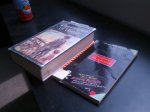
Imagine my pleasure when I picked up The Story of Tracy Beaker, and found it to me such a slim book. This is mostly owning to how long Middlemarch and The Grapes of Wrath are. I just realized a couple of weeks ago that I am running a bit behind in my goal to read 100 books by 40. In addition, I have an epic copy of The Grapes of Wrath from the Hamilton County Library. It looks like it was bound in the 60’s and was acquired from another library by Hamilton county. It is complete with multiple students notes and highlights.

The Story of Tracy Beaker is a children’s book. But the themes seem a bit heavy for kids. In all fairness, I don’t know any young adults well and can’t have a firm grasp on what they can and cannot digest. The book is written from the perspective of a ten year-old girl living in a children’s home awaiting a new foster family. She’s been bounced around to a couple of different homes, and acts out in a way that is reasonable given her history.

My epic copy of The Grapes of Wrath

My epic copy of The Grapes of Wrath and The Story of Tracy Beaker

This book was touching, and adequately described what sort of feelings kids without homes must experience. The ending was realistic and hopeful without being a storybook finish. This was a great two-hour read, and I would suggest it.


5 Comments

100 Books by 40: Tess of the d’Urbervilles: A Pure Woman Faithfully Presented

I am starting with an aside. I don’t watch much TV, outside Mad Men and Breaking Bad. I was watching Fringe. I just started back up with Dexter. I feel like I have gone from drinking a 20 dollar bottle of wine to a 50 dollar bottle of wine. Dexter is a great show. I dropped off after the Julia Stiles season; I hate her. And that season was such a disappointment after the John Lithgow season. So far Colin Hanks is a vast improvement over Stiles.

Now then Tess, this was a great book. It is set in 1870’s England. The book primarily tells the tale of what happens to women as a result of sexual indiscretion as opposed to men. Things have changed little from the time of this novel to today. Men are still easily forgiven if not encouraged to express themselves sexually, and women are still penalized. Sure the consequences have changed, but the overall practices are quite similar. Girls who claim rape are bullied on Twitter (thanks Stubenville rape case). Women who advocate for accessible birth control are called sluts (thanks Rush Limbaugh).

The author was very sympathetic to Tess. The author seems to argue that sexuality, particularly female sexuality is natural. There is one bit that I didn’t enjoy about the book, and discussing it requires a spoiler alert.

*********************SPOILER ALERT**********************************
Tess ultimately murders the man who took here virginity. There are many things that lead to this which makes the reader sympathetic to Tess’ actions. She flees with the man who she actually loves; she is apprehended while sleeping on the altar of Stonehenge. This metaphor for nature being sacrificed at the altar of convention and religion was a bit too much for me. I felt like this bit was heavy-handed. Otherwise the book was really great.


Leave a comment

100 Books by 40: The Hobbit

I finished reading The Hobbit this week. And I’m nearly done with Tess of the d’Urbervilles. I started this project 12 months ago, so this is a great time to check my progress and evaluate my reading pace as compared to my goal. If that last sentence felt controlled, you should know that I manage multi-million dollar projects for a Fortune 50 company. Charting progress against a measurable goal is like breathing to me. Sorry about it.

Now then, The Hobbit was such a pleasant romp as compared to Gone with the Wind. Unlike my sequence of book-reading vs movie-viewing for The Lord of the Rings booksI saw The Hobbit: An Unexpected Journey before I read the book. Having finished the book, I can say dividing the book into tree movies was a poor choice. The book has a nice brisk pace to it; it’s exciting to read. The first movie was a total snooze in comparison. I enjoyed this book very much. Don’t let the movie dissuade you from picking it up.

I have been reading for 12 months. With seventeen books under my belt, I have averaged 1.42 books read per month. Since I have 30 months remaining and 67 books left to read, I will need to increase my pace to 2.23 books read per month.  That’s a 36% increase. While that’s nothing to sneeze at, I did read other stuff this year. I browsed my subscriptions to the New York Times, The New Yorker, The Atlantic, The Economist. On top of that, I read I Thought It Was Just Me (but it isn’t): Making the Journey from “What Will People Think?” to “I Am Enough”, What do Women Want?,  and Quiet: The Power of Introverts in a World That Can’t Stop TalkingThese books were great for very different reasons. I didn’t write about them here, mostly because they aren’t on my list.

I am thinking that if I cut out that other reading, I should make my goals. It’s just tough to keep at that list. Most of the books are pretty tough reading and cover emotionally difficult subject matter. The Grapes of Wrath is coming up, for example. I am sure I will learn a lot from that book and value my experience reading it. But let’s be honest, if we all wanted to live in the reality of The Great Depression wouldn’t we have chosen to stay there? Exactly. I need to stop writing and read…


Leave a comment

100 Books by 40: Corelli’s Mandolin

This book was cute. It was cute about familial relationships. It was cute about love. It was cute about conflict. It was cute about war. If a book can be cute about World War II, what can’t it be cute about? Nothing. The answer is nothing. For the first quarter of the book, I found this pithy dialog endearing. The feeling shifted to irritation quickly.

The book was set in World War II on a small Greek island. Imagine if you applied the comedic tone from My Big Fat Greek wedding in a book about war? That’s what this book is. I can’t tell if this light-hearted treatment is peculiar to Greek culture or just this author. I just know that beside Gone With The Wind this seems like a children’s book.

The book did have some stellar quotes though.

“I am not a cynic, but I do know that history is the propaganda of the victors.”
“We should care for each other more than we care for ideas, or else we will end up killing each other.”

I don’t suggest reading Corelli’s Mandolin. If you want to read books in war settings Birdsong and Catch-22 were far better reads. Hell Catch-22 should just be required reading for all Americans.

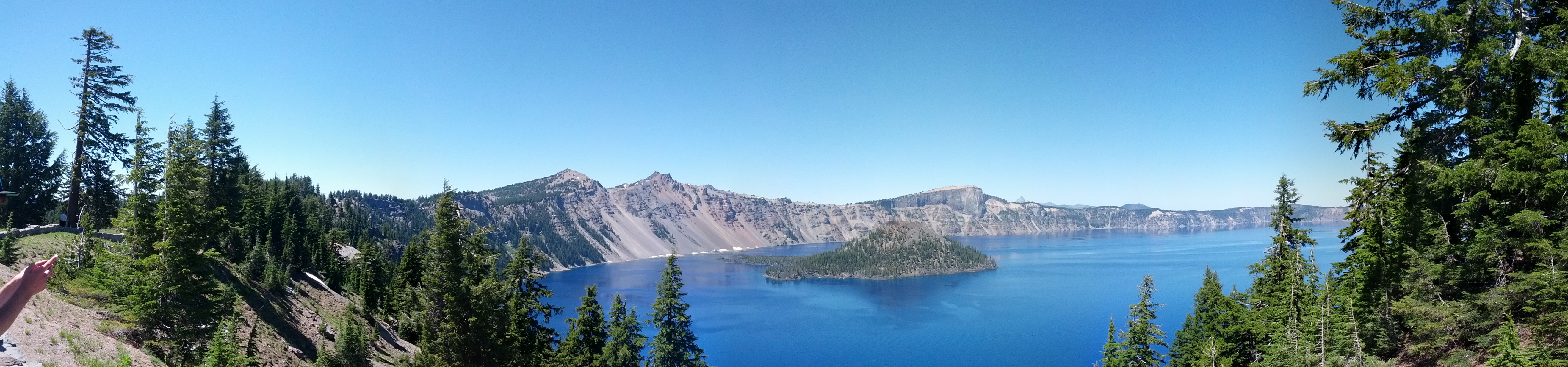
I was traveling around the west coast while I was reading this book. I will leave you with a gorgeous picture of Crater Lake.

Crater Lake Panorama

This is at Crater Lake park in Oregon. The water is really that color. There was no picture editing software or filters in use for this shot.

Still gorgeous, but with some app filters applied.

Still gorgeous, but with some app filters applied.


Leave a comment

100 Book by 40: Gone With The Wind or Love/Hate Paula Deen

I’ve noticed something peculiar. People seem to have pretty extreme reactions to the Paula Deen scandal. On one end of the spectrum, I have friends who are boycotting all of Deen’s sponsors who dropped her. On the other end, I have friends who are boycotting Paula Deen and her shows and products. The one thing these two groups have in common is that they are all pretty vocal about their thoughts.

Personally, I can’t get very excited about Deen, neither her offenses nor the aftermath. It’s people’s strong reactions that got me interested in the affair. After some thought, I realized that Paula Deen’s schtick revolves around romanticizing antebellum southern culture. Her comments inflamed many people because, at some subcousious level most non-southerners believe that racism lays just out of sight in that romance.

The Slate Culture Gabfest does a good job of dissecting this phenomena. Jump to it here.

Gone with the Wind was awash in plantations. It was soaked in racism; the kind that would quite naturally and shamelessly compare a young slaves to animals like bucks and tigers. The comparison was thoughtless and completely unconscious. The slaves aren’t considered to have dreams or volition. Margaret Mitchell lays out how kind her characters were to the slaves. They would care for their health. There were so kind as to purchase their children or spouses. Ah, the kind, kind plantation owners getting rich off the free labor of slaves. They work so hard and spend some of their precious wealth on their slaves. Oh the generosity! Her attitude is patronizing and insulting.

Race issues aside, Scarlett O’Hara is a selfish ass. Gone with the Wind is a very long book to dislike the main character. I’m sure Scarlett’s racism prevented me from feeling any ounce of sympathy for her. In fact, I failed to find sympathy for any of the wealthy plantation owners who found themselves in poverty after The Civil War. Their wealth came off the backs of others. Regardless, the characters are so entitled.

I thought this book would help me find appreciation for southern culture. It did not. Enter Paula Deen’s big mouth. Given my recent reading, any sympathy I might have had for Deen is now gone with the wind. She said something offensive. She faced repercussions for saying it. She’s a wealthly woman who might be a little less wealthy.

Summary: If this book were considerably shorter, I would suggest it for a read. But given that’s very long, I don’t recommend it.

Quotes that I like: “There was no one to tell Scarlett that her own personality, frighteningly vital though it was, was more attractive than any masquerade she might adopt. Had she been told, she would have been pleased but unbelieving. And the civilization of which she was a part would have been unbelieving too, for at no time, before or since, had so low a premium been placed on feminine naturalness.”

“Life’s under no obligation to give us what we expect. We take what we get and are thankful it’s no worse than it is.”


Leave a comment

100 Books by 40: Alice in Wonderland

I am still slogging through Gone With the Wind but managed to read all of Alice in Wonderland in an hour. I am experimenting with blogging on my phone. I think thumbing in my entry will make me a lazier writer. But I have little alternative being that I am in a car driving up the West Coast. It does make for pretty scenery though.

image

Alice in Wonderland was meh. Easily the most interesting aspect of this book is the imagery. Trying to make sense of the plot is like trying to make sense of the Teletubbies show. There really isn’t any point. The dialog does make light of how absurd English is. There are so many words that sound the same, and many phrases that are only understood as idioms.

Now I will go back to writing my entry on Gone with the Wind. In that entry, I will manage to offend everyone with my take on the Paula Deen controversy and the irrational love affair that white Americans have with the antebellum south.


2 Comments

100 Books by 40: Little Women is a Stupid, Stupid Book

Wow. I really hated Little Women. Quite a bit of the plot revolves around romance, and I don’t enjoy romance when it’s the focus of the plot. But that’s not what really drove me nuts about this book. It was all the heavy-handed moral lessons. It was so simplistic. When the characters took action that was deemed morally good, they were rewarded almost immediately. When the characters took action that was deemed morally wrong, they were punished, with the exception of what happens to Beth.

There were several instances of the mother, teaching her daughters a lesson by allowing them to engage in behaviors that were unfavorable and magically the universe always instructed them perfectly. It was so patronizing. There are at least 6 instances of this sort of lesson-learning.

This would all be enough to make me hate this book. But there is more. One of the characters, Jo, seems to be based on Alcott herself. Alcott never married and once said that she thought she was born with the soul of a man because she had fallen in love with many pretty women but not one man. She did have one documented relationship with a man, but I think it’s safe to say she probably had some homo tendencies.

***************SPOILER ALERT*************************************

Jo, the character that eschews gender norms, gets married at the end of the book. It’s pretty remarkable that this character existed at all in 1868. It’s even more remarkable that this was accepted as a children’s book. Regardless, I would have preferred that Jo remained single at the end of the book just as Alcott did. That wouldn’t have been scandalous, but more true to the character. It also wouldn’t have made for a marketable happy ending.

My partner pointed out that perhaps this was the way Alcott wished that her life had gone. I know I spent a lot of my teens and twenties wishing that I wasn’t gay. I am sure that I am not alone in this; being outside the norm in this regard is isolating and much more so for those that are raised in intolerant or unaccepting environments.

I intellectually understand the argument that engaging in a homosexual relationship is a choice. It doesn’t resonate on an emotional level though. The canyon that  exists between living authentically and living in the closet is vast. This brings me to the core of why I didn’t enjoy this book. It made that silent desperation that is living so close and yet so far from the bond that we all crave palpable and close.


2 Comments

100 Books by 40: Great Expectations and Birdsong

I am reading Little Women right now. I hate it. I am not very keen on romance novels. This particular preference becomes important later when I write about Birdsong and Great Expectations. So Little Women has that strike against it. The author is so heavy-handed in her moral lessons, I can barely stand it. I will hold off on ranting more until I actually finish the book. On a bright note, I am liking Gone With the Wind so far.

Great Expectations wasn’t that great. I don’t know what I was expecting, but that wasn’t it. Here’s what I did find interesting about the book. The episodic writing that Dickens employs is reminiscent of TV show plot lines. I’ve read Dickens before, but I learned just prior to picking up Great Expectations that he was often writing chapter by chapter for publication in periodicals. I enjoyed the short story arcs to keep readers coming back mixed with the broader story arcs. Seriously, TV writers could take a lesson.

As mentioned earlier, I don’t really appreciate romance. So, the Pip/Estella story line was less than enthralling to me. The setting, 1800’s England, was super cool. The descriptions around the ambient culture was also super cool. Would I read it again? No. Would I suggest that others read it? Only if they want to write TV scripts. Would I read other novels by Dickens? Probably.

Birdsong. This book bounces across different times starting prior to WWI and ending in the 1970’s. This is a romance novel. By now you should know how much I appreciate that. The storytelling in this book was well executed. Some pivotal plot points hang around the characters and their relationship to WWI. There are several scenes in the book that describe WWI battles. I loved the WWI parts of this book. LOVED THEM. The large story arc is about a women getting to know more about her grandfather and learning about herself in the process.

*****SPOILER ALERT***** Do not read on if you want to read this book.
I was ok with the romance driving the book. Then I got to the end. The end of the book has the main character giving birth in a farm house. Pure cheese, I wanted to punch the book. After the bloody chapters describing WWI, this ending felt really trite. This woman who was seeking herself could only be found by becoming a mother? Like adding that complication is going to clarify what one wants out of life. I would have not started the book had I known how aggravating the ending would be. Would I read it again? NO! Would I suggest that others read it? If the person in question loves romance novels. Would I read other novels by Faulks? NO.

And since I haven’t provided you with an updated reading list in a bit, here it is.

Reading now:
18. Little Women, Louisa May Alcott
21. Gone with the Wind, Margaret Mitchell

Finished reading:
1. The Lord of the Rings, JRR Tolkien
2. Pride and Prejudice, Jane Austen
3. His Dark Materials, Philip Pullman
4. The Hitchhiker’s Guide to the Galaxy, Douglas Adams
5. Harry Potter and the Goblet of Fire, JK Rowling
6. To Kill a Mockingbird, Harper Lee
7. Winnie the Pooh, AA Milne
8. Nineteen Eighty-Four, George Orwell
9. The Lion, the Witch and the Wardrobe, CS Lewis
10. Jane Eyre, Charlotte Brontë
11. Catch-22, Joseph Heller
12. Wuthering Heights, Emily Brontë
13. Birdsong, Sebastian Faulks
14. Rebecca, Daphne du Maurier – this will need to come from the library or second hand books
15. The Catcher in the Rye, JD Salinger – – this will need to come from the library or second hand books
16. The Wind in the Willows, Kenneth Grahame
17. Great Expectations, Charles Dickens
20. War and Peace, Leo Tolstoy
22. Harry Potter And The Philosopher’s Stone, JK Rowling
23. Harry Potter And The Chamber Of Secrets, JK Rowling
24. Harry Potter And The Prisoner Of Azkaban, JK Rowling
42. Watership Down, Richard Adams
43. The Great Gatsby, F Scott Fitzgerald
46. Animal Farm, George Orwell
53. The Stand, Stephen King
60. Crime And Punishment, Fyodor Dostoyevsky
63. A Tale Of Two Cities, Charles Dickens *I read this when I was too young to appreciate it; I would like to read it again as an adult. I will do so if I have time.
70. Lord Of The Flies, William Golding *I’ve read this twice. I will read it again if I have time.
87. Brave New World, Aldous Huxley
90. On The Road, Jack Kerouac *I’ve read this twice. I will read it again if I have time. I have the unabriged unedited version and will probably take on that if time allows.

Pending reading:
19. Captain Corelli’s Mandolin, Louis de Bernieres
25. The Hobbit, JRR Tolkien
26. Tess Of The D’Urbervilles, Thomas Hardy
27. Middlemarch, George Eliot
28. A Prayer For Owen Meany, John Irving
29. The Grapes Of Wrath, John Steinbeck
30. Alice’s Adventures In Wonderland, Lewis Carroll
31. The Story Of Tracy Beaker, Jacqueline Wilson
32. One Hundred Years Of Solitude, Gabriel García Márquez
33. The Pillars Of The Earth, Ken Follett
34. David Copperfield, Charles Dickens
35. Charlie And The Chocolate Factory, Roald Dahl
36. Treasure Island, Robert Louis Stevenson
37. A Town Like Alice, Nevil Shute
38. Persuasion, Jane Austen
39. Dune, Frank Herbert
40. Emma, Jane Austen
41. Anne Of Green Gables, LM Montgomery
44. The Count Of Monte Cristo, Alexandre Dumas
45. Brideshead Revisited, Evelyn Waugh
47. A Christmas Carol, Charles Dickens
48. Far From The Madding Crowd, Thomas Hardy
49. Goodnight Mister Tom, Michelle Magorian
50. The Shell Seekers, Rosamunde Pilcher
51. The Secret Garden, Frances Hodgson Burnett
52. Of Mice And Men, John Steinbeck
54. Anna Karenina, Leo Tolstoy
55. A Suitable Boy, Vikram Seth
56. The BFG, Roald Dahl
57. Swallows And Amazons, Arthur Ransome
58. Black Beauty, Anna Sewell
59. Artemis Fowl, Eoin Colfer
61. Noughts And Crosses, Malorie Blackman
62. Memoirs Of A Geisha, Arthur Golden
64. The Thorn Birds, Colleen McCollough
65. Mort, Terry Pratchett
66. The Magic Faraway Tree, Enid Blyton
67. The Magus, John Fowles
68. Good Omens, Terry Pratchett and Neil Gaiman
69. Guards! Guards!, Terry Pratchett
71. Perfume, Patrick Süskind
72. The Ragged Trousered Philanthropists, Robert Tressell
73. Night Watch, Terry Pratchett
74. Matilda, Roald Dahl
75. Bridget Jones’s Diary, Helen Fielding
76. The Secret History, Donna Tartt
77. The Woman In White, Wilkie Collins
78. Ulysses, James Joyce
79. Bleak House, Charles Dickens
80. Double Act, Jacqueline Wilson
81. The Twits, Roald Dahl
82. I Capture The Castle, Dodie Smith
83. Holes, Louis Sachar
84. Gormenghast, Mervyn Peake
85. The God Of Small Things, Arundhati Roy
86. Vicky Angel, Jacqueline Wilson
88. Cold Comfort Farm, Stella Gibbons
89. Magician, Raymond E Feist
91. The Godfather, Mario Puzo
92. The Clan Of The Cave Bear, Jean M Auel
93. The Colour Of Magic, Terry Pratchett
94. The Alchemist, Paulo Coelho
95. Katherine, Anya Seton
96. Kane And Abel, Jeffrey Archer
97. Love In The Time Of Cholera, Gabriel García Márquez
98. Girls In Love, Jacqueline Wilson
99. The Princess Diaries, Meg Cabot
100. Midnight’s Children, Salman Rushdie